Charging electric bikes: outdoors, inside the building and beside the path
Three separate products. The solar Shelter is a free-standing structure with its own photovoltaics, battery and inverter, covering up to ten bikes. The wall-mounted ChargeGo Box supplies eight charging points from the building installation. The free-standing ChargeGo Pole serves two charging points and runs on its own panel. They differ in structure, power source, protection and price. What they share is the software: the app, the control panel and the way access is granted.
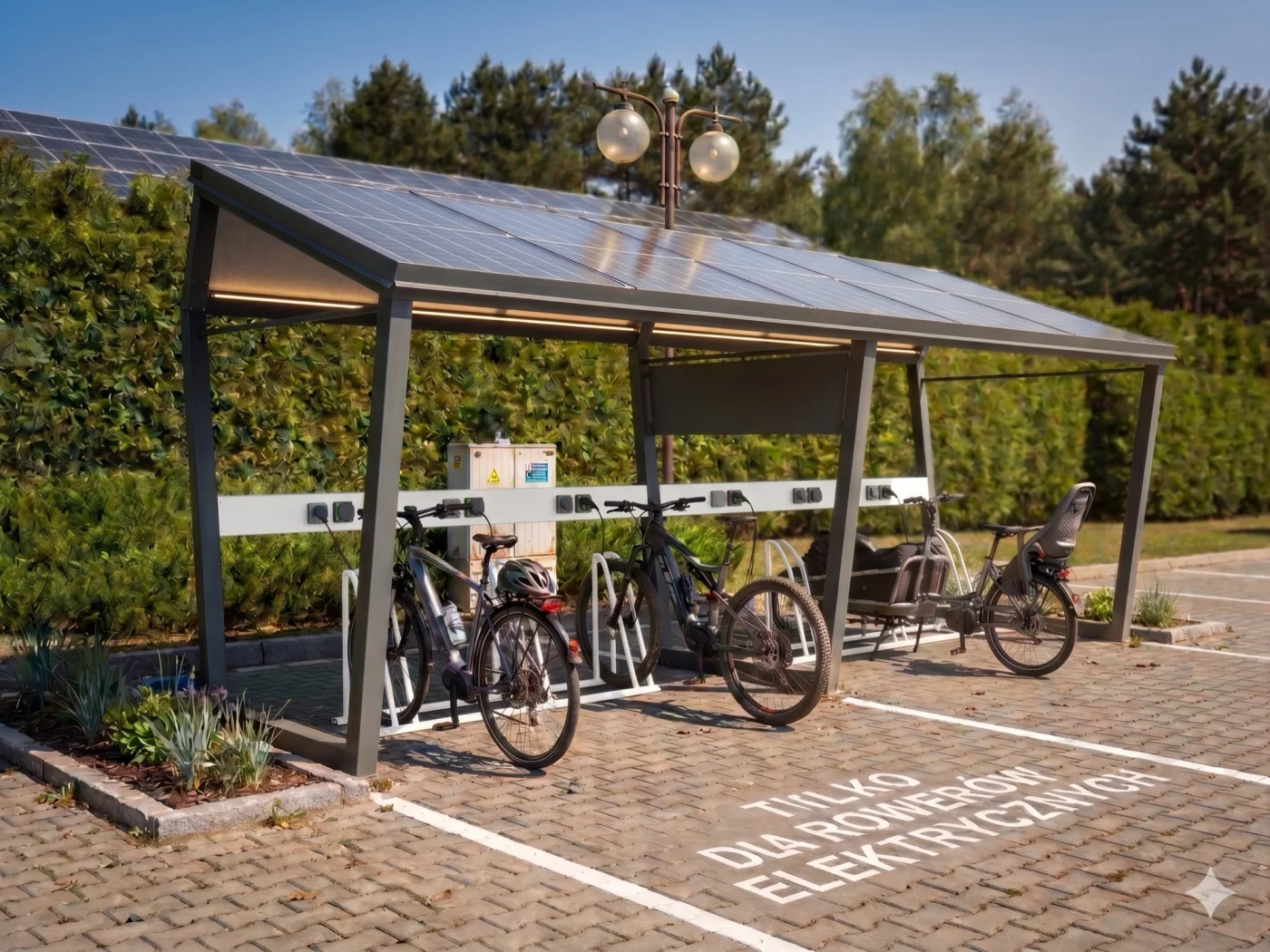
ChargeGo Shelter
A freestanding structure with rooftop solar and a battery. It runs with no grid connection: in a car park, in front of a hotel, on a housing estate or along a bike trail.
- 10 charging points (open), or a lockable Shelter with doors, locks and 3 or 6 charging points
- 1.74–3.48 kWp solar + LFP battery, 24/7 off-grid operation
- From €18,500 excl. VAT
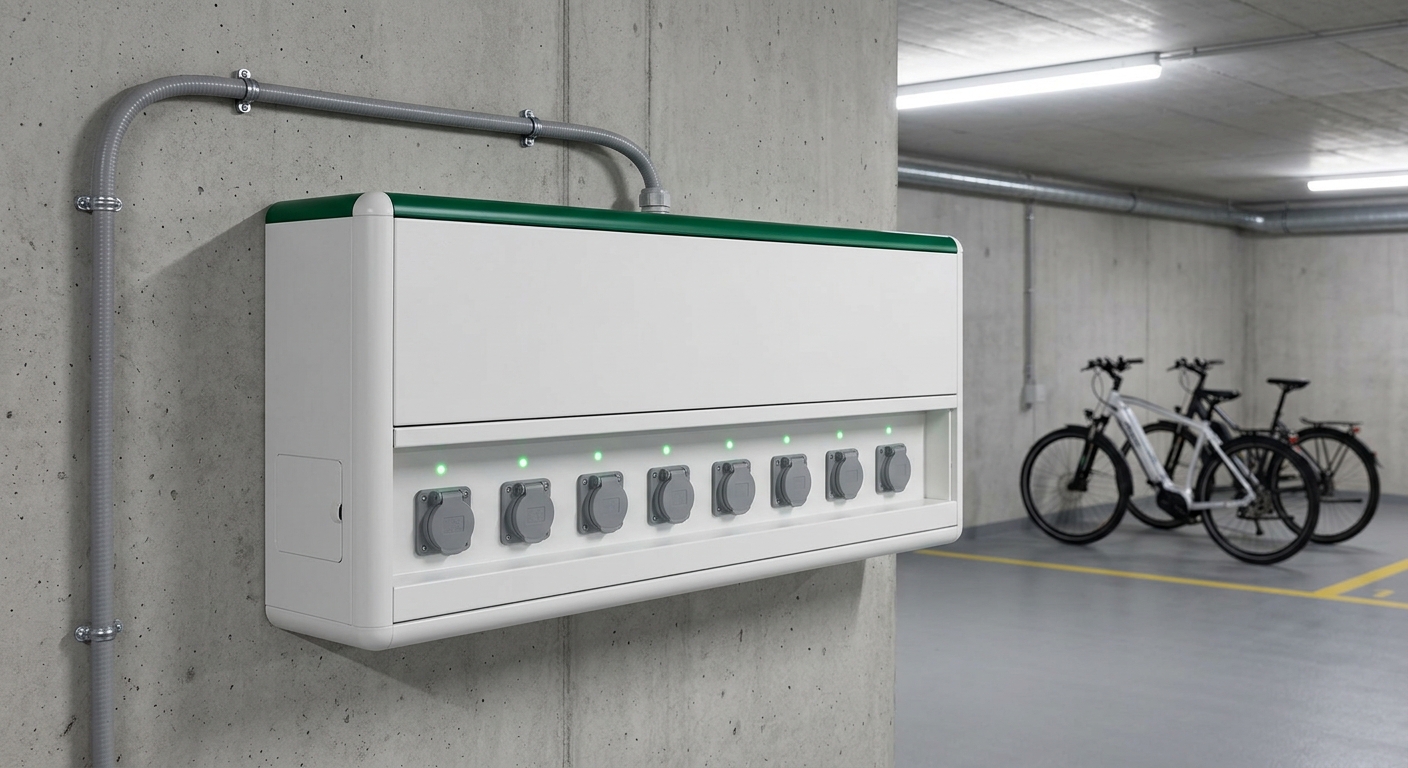
ChargeGo Box
A wall-mounted station for an underground garage, bike room or hall. No structure or foundation to build; the unit mounts on an existing building's wall, typically without a building permit or notification.
- 8 charging points powered from a single 230 V / 16 A circuit
- IP44 sockets with covers, energy metering on every charging point
- Started from the mobile app, or optionally a PIN code or RFID card
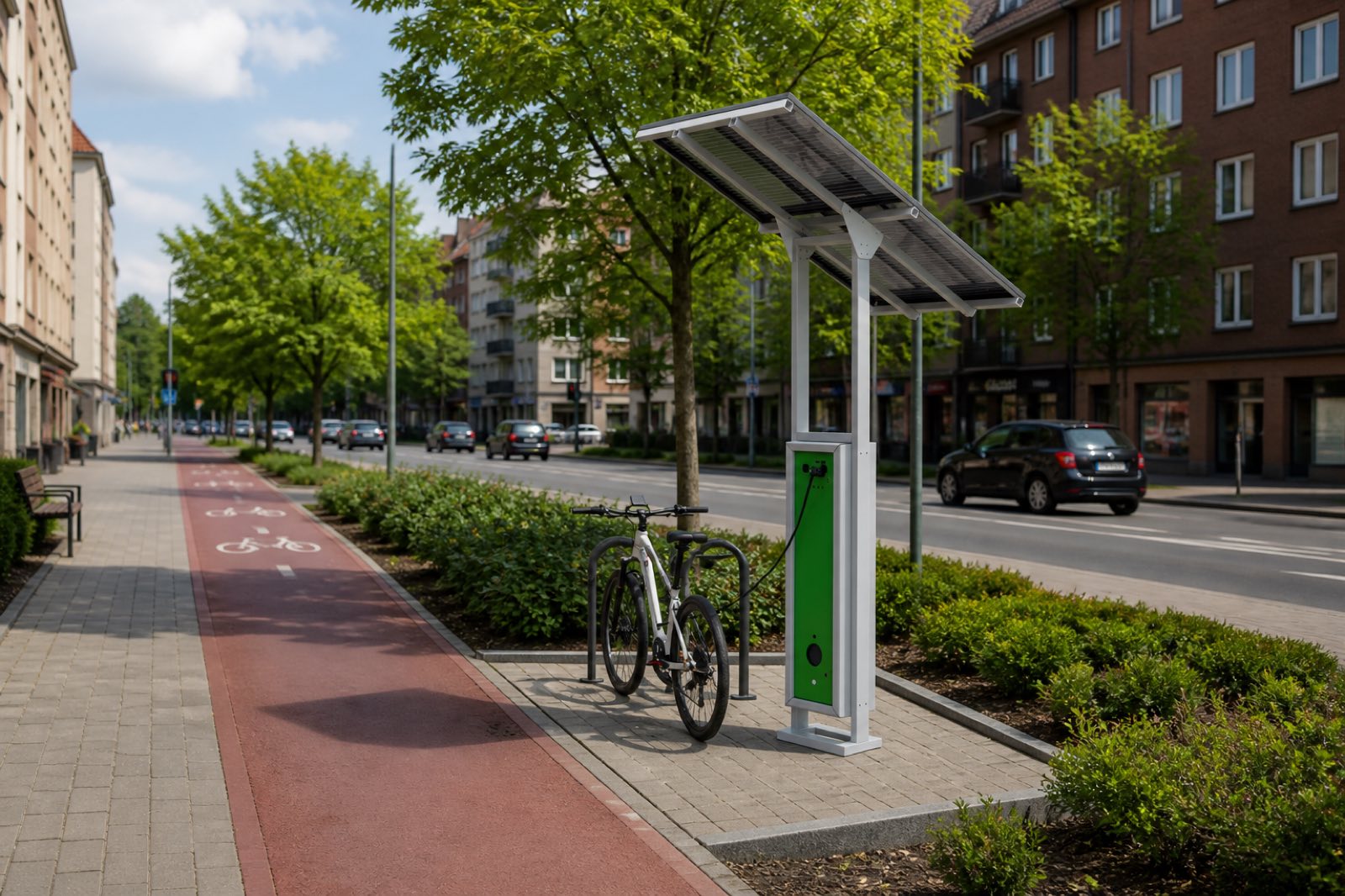
ChargeGo Pole
A free-standing solar station 2.8 m tall, anchored to a foundation. Panel on the mast, battery in the body, sockets on the door face. It goes beside a cycle path, on a square or out on a route, where there is nothing to dig up.
- Two 230 V sockets and four USB ports, up to 300 W per charging point
- 600 Wp bifacial panel and 1 kWh LiFePO₄ battery, runs with no grid connection
- Service version with tools and a compressor rated to 8 bar
ChargeGo Shelter, Box or Pole — a comparison
Where the unit goes is the first criterion: ground with no grid connection points to the Shelter or Pole, a free interior wall to the Box. Between Shelter and Pole it comes down to the number of charging points and whether the bikes need covering.
| Feature | ChargeGo Shelter | ChargeGo Box | ChargeGo Pole |
|---|---|---|---|
| Location | Outdoors, a freestanding structure | Indoors, mounted on an existing building's wall | Outdoors — free-standing post anchored to a foundation |
| Charging points | 10 (open) or 3 / 6 (lockable shelter) | 8 | 2 (or 1 in the Mobile version) |
| Power source | Off-grid: solar panels + battery | A single 230 V / 16 A circuit | Off-grid — panel and battery; 230 V connection optional |
| Solar panels | 1.74–3.48 kWp on the roof | Bifacial 600 Wp on the mast (option: 2 × 600 Wp) | |
| Battery | LFP ~1.8–6 kWh | LFP 1 kWh (option: 2 kWh) | |
| Power draw limit | Current metering per socket; a charging point cuts off past its threshold, and the 3,000 VA inverter caps total output | 2 A (~460 W) limit per charging point, enforced electronically | 300 W per socket, enforced electronically |
| Protection | PV and battery side plus switchgear per the electrical design | All included in the unit housing; an electrician sets the scope of work on the building's electrical side after a site visit | PV and battery side; an off-grid unit has no building circuit |
| Metering per charging point | Current metering on every socket | Energy meter on every socket | Energy meter on the socket as an option |
| App, QR and Bluetooth | |||
| Lockable enclosure | In the lockable shelter variant: doors and locks | Not applicable, the unit sits inside the building | Lockable service door for maintenance access, not for storing a bike |
| Foundation and structure | Screw anchors or a foundation | None, it is wall-mounted | Base plate anchored to a foundation |
| Building permits | Usually a notification, see the guide | Generally no permit or notification required | An anchored unit rather than a building — the procedure depends on the plot |
| Price | From €18,500 excl. VAT (lockable shelter €23,500 / €32,500) | From €3,450 excl. VAT per unit; fire and smoke monitoring and RFID cards +€240 each | From €4,600 excl. VAT (with the service module €6,000) |
Catalogue prices, excluding VAT. They cover the units themselves; installation, transport, foundation and electrical work are quoted separately where the site needs them.
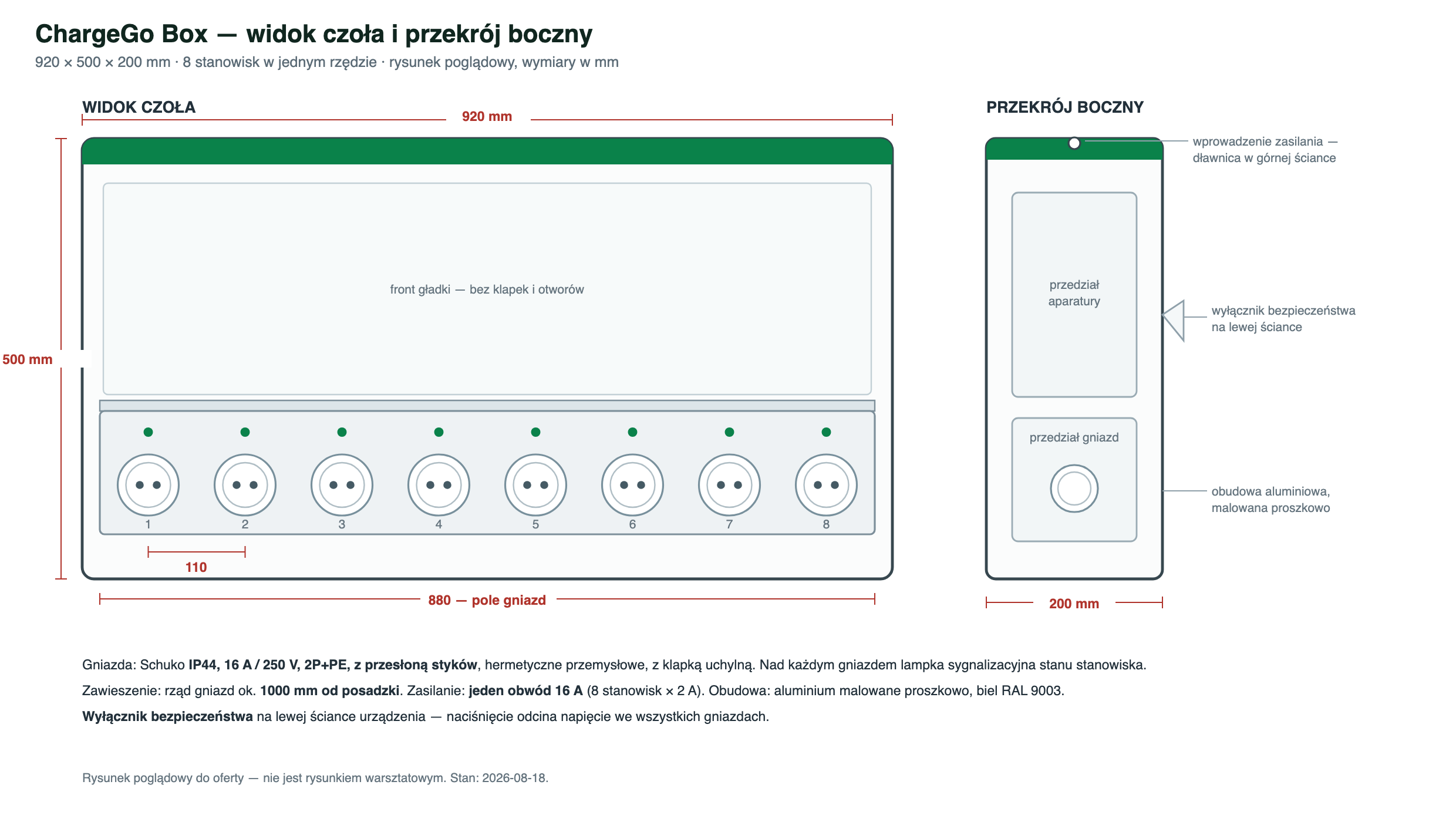
ChargeGo Box technical drawing
A reference drawing for quoting: front view and side cross-section, charging point spacing, the power entry point and the location of the safety switch.
Questions about choosing a product
Not sure which one fits?
Describe the site (open ground, a garage, a bike room) and we'll tell you what works there, with price ranges. We reply within 1–2 business days.